
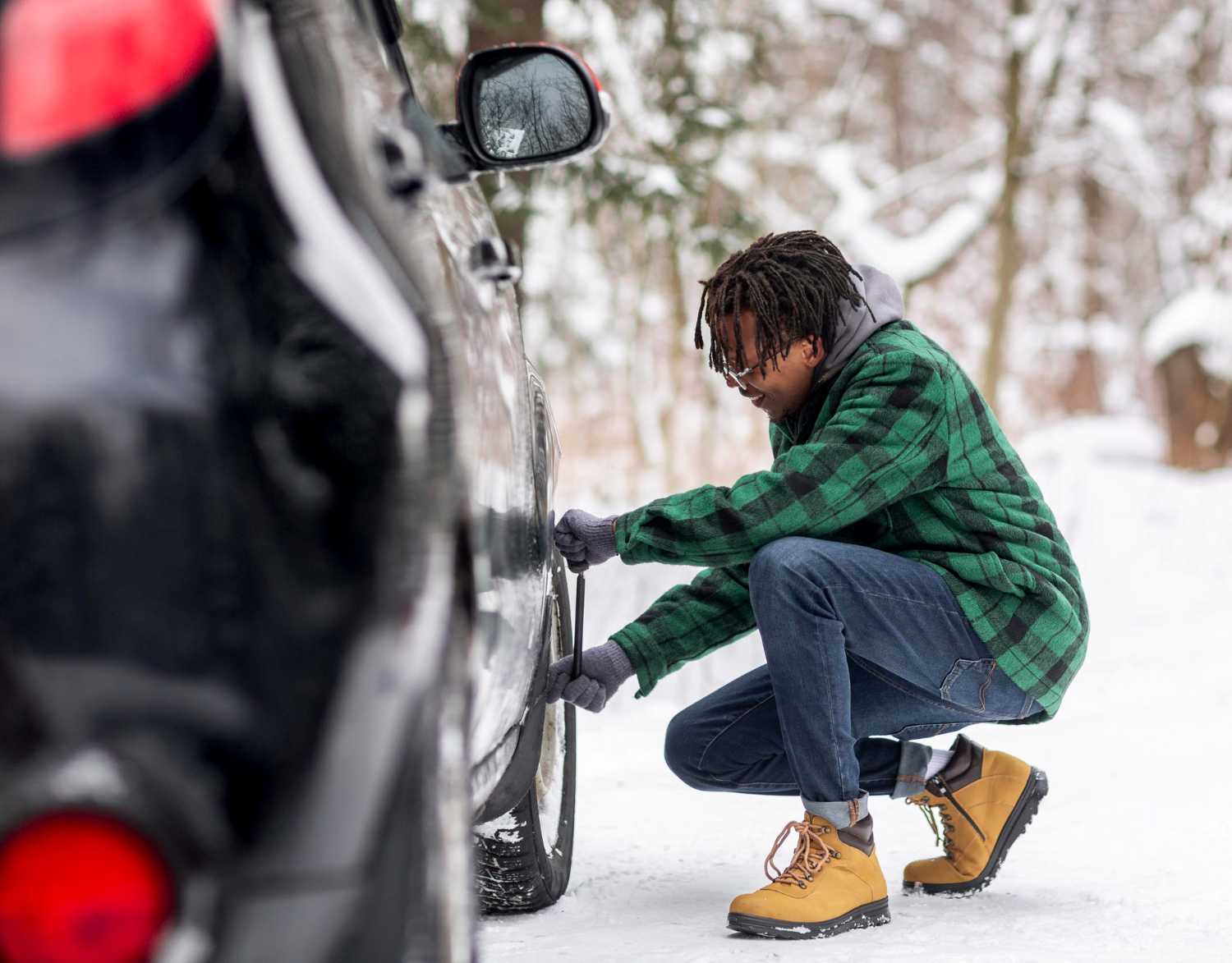
When temperatures drop, your car may alert you to low tire pressure even if your tires were properly inflated a few weeks earlier. This happens because cold air takes up less pressure inside your tires, affecting how they perform on the road. Maintaining the correct tire pressure is essential for safe handling, reliable braking and even tire wear. Understanding why pressure drops during colder months can help you prevent unnecessary tire damage and keep your vehicle ready for changing road conditions.
Air pressure inside your tires changes with temperature. As the air cools, its pressure decreases, typically by about 1 PSI for every 10°F drop in temperature. For example, a tire inflated to 35 PSI in warmer weather may lose around 3 PSI after a 30°F temperature drop, assuming other conditions remain similar. This is why your tire pressure monitoring system (TPMS) may activate during a cold morning even when there is no puncture.
The best time to check tire pressure is when your tires are cold, ideally before driving or after the car has been parked for several hours. Use a reliable tire pressure gauge to measure each tire, including the spare if applicable. Compare the readings with the recommended pressure listed on the driver's doorjamb placard or in your owner's manual. Avoid using the maximum pressure printed on the tire sidewall as your target, because it is not the vehicle's recommended operating pressure.
If your tire pressure is below the recommended level, add air using a suitable compressor at home or at a service station. Check the pressure again with your gauge to make sure each tire meets the manufacturer's specification. Proper inflation helps maintain tire contact with the road, supports predictable handling and reduces unnecessary wear. If you have been driving and the tires are warm, follow the vehicle manufacturer's guidance rather than releasing air simply because the reading is higher.
Your tire pressure monitoring system helps alert you when one or more tires are significantly underinflated. If the warning light appears during cold weather, check all tires as soon as it is safe to do so and adjust their pressure as needed. The light may take some driving time to reset, depending on your vehicle. If it remains illuminated after correcting the pressure, or if it flashes before staying on, consult your owner's manual or arrange an inspection.
Cold weather can reveal an existing tire problem, but temperature changes are not the only reason pressure drops. A nail, damaged valve stem, leaking bead seal or other puncture can cause air loss. If one tire repeatedly loses pressure faster than the others, have it inspected by an auto repair professional. Avoid driving on a visibly flat or severely underinflated tire, as doing so can damage the tire and compromise your safety.
Check your tire pressure at least monthly and before long journeys, with additional checks during significant temperature changes. Inspect the tread for uneven wear and visible damage, and make sure your tires are suitable for the weather and road conditions you encounter. Regular tire maintenance helps you identify small issues early and supports safer, more predictable driving throughout the colder months.
Cold weather naturally lowers tire pressure, but a quick check and the right adjustment can help keep your vehicle performing as intended. By monitoring pressure regularly, following your manufacturer's recommendations and addressing persistent air loss promptly, you can protect your tires and improve driving safety. If you are unsure about a tire's condition, a qualified auto repair professional can inspect it and recommend the right solution.